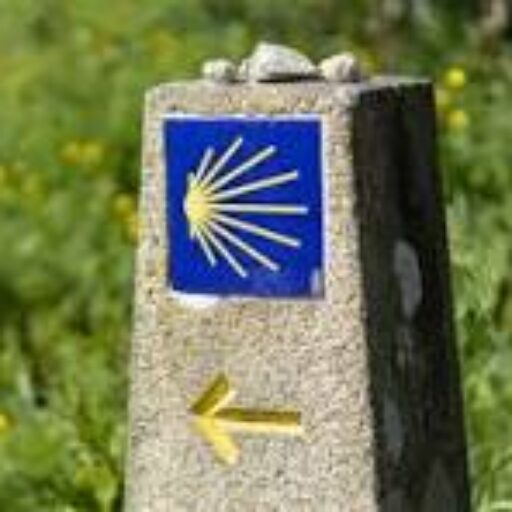
Traditions and Legends of the Camino
Other Traditions
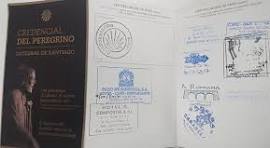
Pilgrim Passport (also known as the ‘credencial’) – You get it stamped along the way in order to prove that you have completed the required distance to obtain a Compostela pilgrim certificate at the Pilgrims Office
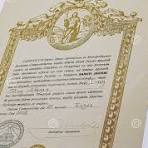
Compostela certificate -is the pilgrim certificate and proof that the pilgrim has walked at least the last 100km to Santiago or cycled at least the last 200km. This certificate (along with many others) is issued by the Pilgrim’s Office in Santiago.
Pilgrim Mass – This mass takes place every day at noon in Santiago de Compostela cathedral. It is a very special moment for most pilgrims, having finally reached their destination after a long journey. If you are lucky, you might see the impressive ‘botafumeiro‘ in action. (I understand that it is being repaired and that I won’t see it in October, 2026.)
Hugging St James – Pilgrims can walk up to the gilded 13th- century figure of Saint James at the back of the main alter in the Cathedral in Santiago and hug it (known as the Abrazo del Apostol – Embrace of the Apostle. Pilgims might offer the following words: “Thank you my friend Saint James, brother Saint James, for helping me to get here! Thank you for your company, for your testimony and your legacy!” (It is considered to represent a reunion with God, with faith or with oneself.)
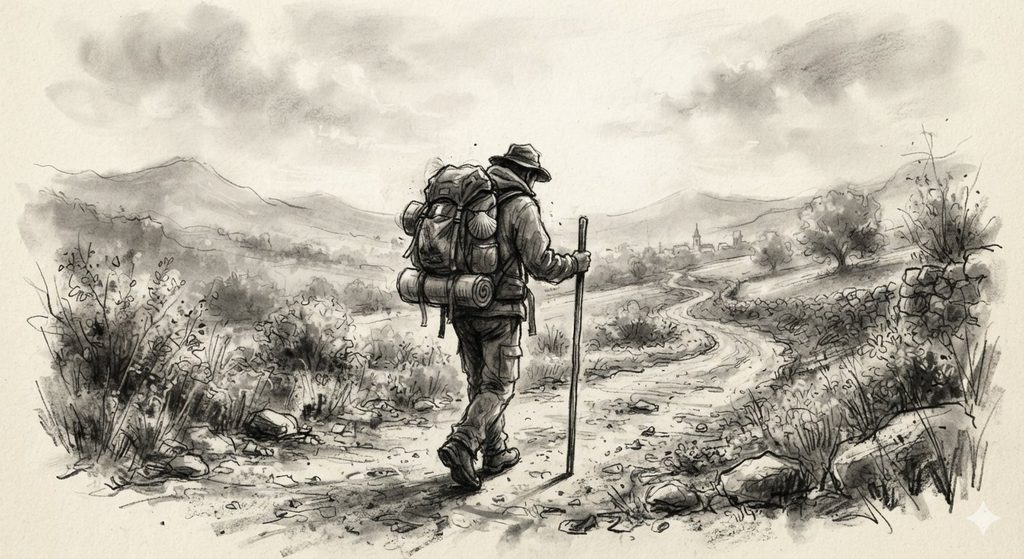
Greeting other pilgrims by saying “Buen camino” (Spanish) or “Bom caminho” (Portugese) – means good path or good journey and by Responding with “Obrigado, igualmente” (thank you, likewise).
Another Greeting to Pilgrims: When medieval walkers passed each other on the path to the Cathedral of Santiago de Compostela, one would call out “Ultreia!” and the other would reply “et suseia!” – Ultreia comes from the Latin ultra (meaning “beyond” or “more”) combined with eia (an interjection of joy or action). It translates roughly to “let’s go further,” “onward,” or “beyond”. Et suseia! translates to “and upward” or “and higher”.