Traditions and Legends of the Camino
From the time that I booked the Tour until the planned departure date I had more than 4 months to prepare. In part, preparation meant doing some research on the Camino and its history. As the heading for this page indicates, there are a number of legends, traditions and mysteries associated with the Camino and I learned a few new words. Being aware of some of the foregoing will, I think, help me with the experience. I thought that I would share some of them.
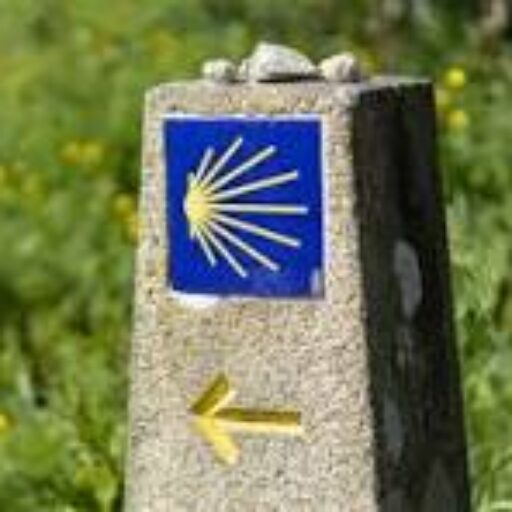
A scallop shell serves as the ultimate historic and spiritual symbol of the pilgrimage route. The shell is native to the coast of Galicia that part of Spain in which Santiago de Compostela is located. Medieval pilgrims collected the shell from the ocean as proof they completed the trek.The routes are marked with milestones and signs bearing a scallop shell and pointing the way to Santiago.
More about the Scallop Shell:
- Legend says that after Saint James was martyred, his body was miraculously transported by boat from Jerusalem to the coast of Galicia, Spain, and his vessel was covered in scallop shells when it reached the shore.
- Another tale tells of a knight whose horse plunged into the sea during a wedding feast and emerged completely covered in scallop shells after being saved by Saint James.
- It had practical uses. Medieval pilgrims used the lightweight, concave shell as a practical cup to scoop drinking water from streams, collect food, or eat meals along the way.
- Proof of completion: Because scallop shells are native to the Galician coast near the end of the route, pilgrims collected them as proof and a badge of honor that they successfully reached Santiago de Compostela.
- Metaphorical meaning: The radiating grooves on a scallop shell all meet at a single point, symbolizing the many different paths and routes across Europe that lead to the same destination: the tomb of Saint James.
- Symbolism: The shell represents baptism, spiritual rebirth, and good deeds, acting as a reminder of the pilgrim’s inner journey.