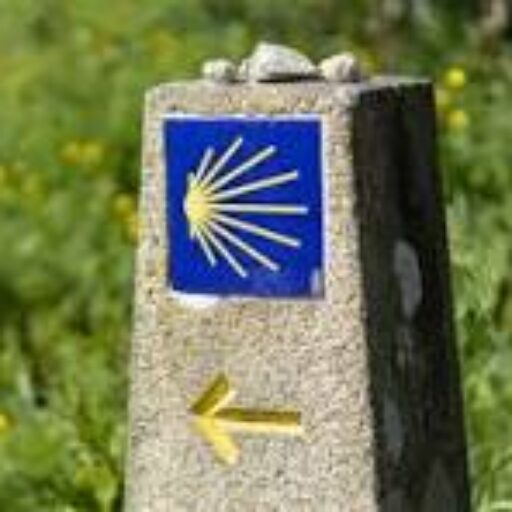
Why the El Camino?
That is a good question and I am not 100% sure of the correct answer. I first became aware of the El Camino when a long-time client described his experience in walking it. I was intrigued by his description of the hiking – a fullsome experience with lots of time to think, spectacular scenery and lots of fellowship while walking or sharing evening meals.
Since that time my interest has been regularly fed by conversations with those who have done the walk and by going down countless Youtube rabbit holes (You might not be surprised to know that I now get more ads for Camino tours when on Youtube than I do for new mattresses or chair tai chi together!).
Since my retirement I have been trying to encourage myself to step outside my comfort zone to, hopefully, find new activities that are fun and/or stimulating. [Somewhat like Homer Simpson: “I want to shake off the dust of this one-horse town. I want to explore the world. I want to watch TV in a different time zone, I want to visit strange, exotic malls”.]
I got in the habit of viewing the UBC Alumni Travel Club website and had noticed for a couple of years that they put together a 12 day Camino Tour walking from Porto, Portugal to Santiago, Spain. This Spring I noticed that there was an opening on this particular tour in October, 2026 and, on impulse, I stepped outside my comfort zone, went online and booked myself in to the tour to satisfy this longstanding “itch” (I guess am going to find out how “comfortable” 12 days of hiking really is.)[I can picture Jack Nicholson’s character in the movie “A Few Good Men” saying to me: “Discomfort! You don’t know what discomfort is!”]
Many pilgrims on the El Camino describe the experience as life-changing or spiritual. While this is not my goal for the walk, I am at least hoping to get something “more” out of the challenge of the walk, the scenery, the new people I will meet and the time to ponder (I wonder if the navel-gazing will reveal more than just lint? – any transforming revelations will sure to become apparent in my daily blogs.) There is a popular saying -“that what you will find on the Camino is often not what you thought you were looking for.”
My Camino
The tour that I am joining is organized by Worldwide Quest which is an Ontario travel agency which works with various university alumni associations. Their website address for anyone interested is: Worldwidequest.com.
I will travel on my own to Portugal (flying into Lisbon) and join the tour group in Porto. After a walking tour of Porto, our group will be taking the Camino Portuges Coastal Route from Porto to Santiago.
A brief overview of the route is:
- Distance – 274 km/170 mi
- Number of days (stages) – 11-15 days
- Starting point – Sé Cathedral, Porto, Portugal
- Finishing point – Santiago de Compostela Cathedral, Spain
- Difficulty level – moderate
- Total ascent – 3990 m
- Total descent – 3716 m
- Walking surface 155 km/96 mi – asphalt/tar; 29 km/18 mi – cobblestones; 65 km/40.3 mi – footpath/gravel road; 24 km/15 mi – boardwalk; 1 km/0.6 mi – beach.
- Walking along the coast – 77.5 km/ out of 274 km/170 mi. The last 86 km/53.4 mi to Santiago are inland on the Central Route.
The route begins in Porto and follows the Atlantic north through well-known coastal towns such as Vila do Conde, Viana do Castelo and Baiona. After passing through Vigo, the route gradually turns inland, joining the Camino Portugues Central in Redondela, before continuing through Galicia towards Santiago de Compostela.
Walking this route means staying close to the sea and the traditions shaped by it. Along the way, pilgrims pass through maritime towns, enjoy fresh seafood and local vinho verde, and walk beside long beaches where wooden boardwalks stretch along the coastline. As Portugal gradually gives way to Galicia, the landscape softens into forests, farmland and traditional villages, offering a gentle transition inland on the final days.